20 Criminals Executed in The Chair

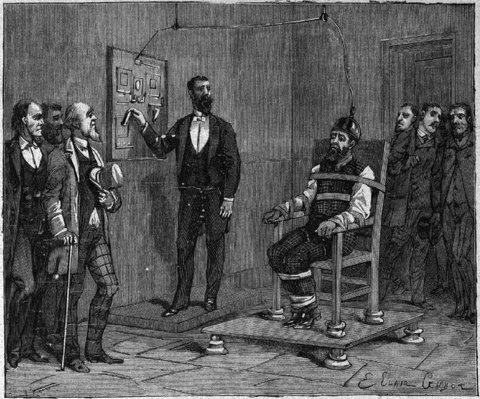
ruth_snyder_cju“Old Sparky.” The words instantly call to mind the electric chair, a method of execution that’s fallen from favor but for a while was the United States’ main method of carrying out death sentences for criminals. It remains an option for execution in a handful of states, all southern: Virginia, Tennessee, Kentucky, South Carolina, Florida, and Alabama. It’s a practice with a storied and often gruesome past. Here are 20 of the men and women put to death in the most notorious method of the 20th century, the electric chair:

1. Ted Bundy (January 24, 1989)
One of the most notorious serial killers in American history, Ted Bundy is estimated to have killed 35 people in the late 1970s. He escaped from prison twice before his final apprehension, and was sentenced to death for his brutal crimes. As his appeals were exhausted and execution drew close, he confessed to more and more killings. He was strapped into the electric chair at Florida State Prison on the morning January 24, 1989, and his final words before being killed by electrocution were: “I’d like you to give my love to my family and friends.”

2. Ruth Snyder (January 12, 1928)
Queens resident Ruth Snyder began plotting her husband’s murder shortly after she began having an affair with a corset salesman. She even tried several times to kill him and collect on a forged insurance policy before she and her lover killed her husband and attempted to make it look like he’d been killed in a robbery. She and her lover were both sentenced to death, but Snyder’s execution in the chair became one of the most famous to date when newspaper photographer captured an image of her at the moment of execution using a hidden camera he’d smuggled into the viewing chamber. The picture made front-page news.

3-4. Julius and Ethel Rosenberg (June 19, 1953)
Julius and Ethel Rosenberg were the first American citizens ever executed for committing espionage. They were convicted of passing information about the atomic bomb to the Soviet Union, but in years since, the levels of Ethel’s involvement have come into question. The dual execution, in New York State’s Sing Sing Correctional Facility, was a controversial one, and eyewitness accounts of the electrocutionssaid that though Julius died quickly, it took three rounds of electrocutions to finally stop Ethel’s heart. Witnesses say smoke rose from her head.

5. Leon Czolgosz (October 29, 1901)
The name might not be remembered much today, but Leon Czolgosz is in the small, disturbed group of men who’ve killed a president. Czolgosz, a recluse interested in anarchism, assassinated President William McKinley on September 6, 1901. He was quickly tried and convicted, and he was killed by three rounds of electrocution at 1,800 volts each at Auburn Prison in Auburn, New York. His haunting final words: “I am not sorry for my crime.”

6. Giuseppe Zangara (March 20, 1933)
Giuseppe Zangara attempted to kill President Franklin Roosevelt in February of 1933, but his shots went wild and he wound up striking and killing Anton Cermak, mayor of Chicago. Interestingly, Zangara was convicted of first-degree murder solely for having intent to kill, even though his victim wasn’t his intended target. He was quicklytried and convicted, spending only 10 days on death row before being put to death in the electric chair. His last words were, “Viva Italia! Goodbye to all poor peoples everywhere! Push the button!”

7-8. Sacco and Vanzetti (August 23, 1927)
Ferdinando Sacco and Bartolomeo Vanzetti, a pair of Italian immigrants, were tried and convicted of a double-murder that took place during an armed robbery in 1920. The highly politicized case has long been regarded as controversial by historians, who maintain that the men were denied basic civil liberties at several key points throughout the legal process. They were executed by the electric chair in August 1927.

9. Hans Schmidt (February 8, 1916)
Hans Schmidt holds the dubious honor of being the only Roman Catholic priest to receive the death penalty in the United States. He began a secret relationship with his New York rectory’s housekeeper that continued after he was transferred, and they even got married in a secret ceremony. However, when she revealed that she was pregnant, Schmidt cut her throat, dismembered her, and dumped her in the Hudson. He was put to death for his crime at Sing Sing Prison. He was also suspected in other crimes, including the murder of a 9-year-old girl at his former church in Kentucky.

10. Bruno Hauptmann (April 3, 1936)
The kidnapping and killing of the infant son of Charles Lindbergh and his wife, Anne, was called the “crime of the century,” so it’s little surprise that the man responsible received a death sentence carried out in the electric chair. Bruno Hauptmann was caught when he spent a gold certificate from the ransom money he’d extorted in the kidnapping. In recent years, though, some have come to question his guilt.

11. Louis “Lepke” Buchalter (March 4, 1944)
Lepke Buchalter was a mob boss whose heyday in the 1930s included protection rackets and multiple orders of murder. Eventually caught and convicted, Buchalter was killed in the electric chair in 1944, and he remains the only major mob boss in American history to receive the death penalty.

12. Charles Starkweather (June 25, 1959)
Charles Starkweather, barely 20 years old, killed 11 people on a murder spree throughout Nebraska and Wyoming in the late 1950s, accompanied by his 14-year-old girlfriend, Caril Ann Fulgate. The killings took place during a two-month road trip, and the events would go on to inspire such films as Badlands and Natural Born Killers. Fulgate served 18 years and was paroled in 1976, but Starkweather received the death penalty and was executed in June 1959. Fulgate refuses to speak of the murders.

13. John Arthur Spenkelink (May 25, 1979)
A pair of Supreme Court cases meant that the death penalty was suspended in the United States from 1972-1976. John Spenkelink was the second person to be executed after capital punishment was reinstated. (The first, Gary Gilmore, died by firing squad in 1977.) Already an ex-con, Spenkelink travelled from California to Florida with a fellow inmate and was convicted of murdering a travelling companion. Spenkelink’s Florida death warrant was overturned the first time by the Supreme Court, but the second one stuck, and he was executed in the electric chair in May 1979.

14. Donald Henry Gaskins (September 6, 1991)
A brutal serial killer, Donald Gaskins actually didn’t start committing murders until in prison for lesser crimes. His first victim was a fellow inmate, though it was ruled he acted in self-defense. After escape, rearrest, and eventual release, Gaskins committed more crimes and rapes, bouncing in and out of prison before killing a series of hitchhikers beginning in September 1969. These victims were often tortured and mutilated. He was eventually convicted on eight charges of murder and sentenced to death, though that was commuted to life in prison in 1974 to follow temporary Supreme Court guidelines on capital punishment. However, once in prison, he killed again, on orders from someone else, and it was this final killing that earned him a death sentence that would be carried out. He confessed to more than 100 murders while waiting on death row, and was put to death in the electric chair in September 1991. His finals words: “I’m ready to go.”

15. Martha Place (March 20, 1899)
Martha Place was the first woman ever executed in the electric chair. In 1898, her husband came home to find Martha wielding an ax, and though he escaped and brought help, Martha managed to murder her 17-year-old stepdaughter via asphyxiation. Teddy Roosevelt, then the governor of New York, was asked to commute the death sentence, but he refused, and thus Martha Place was put to death.

16-17. Linwood and James Briley (October 12, 1984; April 18, 1985)
Brothers James and Linwood Briley, along with younger brother Anthony, were bad seeds from youth, and in 1979 they took on accomplice Duncan Meekins and went on a seven-month killing spree in and around Richmond, Virginia. Eventually captured and arrested, Meekins turned on the brothers to avoid the death penalty, and Anthony Briley also received life with possible parole because of his limited role in the murders. Linwood and James were both sentenced to death but led four other men in a prison break in May 1984. Recaptured soon after, their appeals quickly ran out, and they were put to death in the electric chair shortly thereafter. To date, Anthony has yet to earn parole.

18-19. Raymond Fernandez and Martha Beck (March 8, 1951)
Raymond Fernandez and Martha Beck, his common-law wife, became infamous as the “Lonely Hearts Killers” after they were arrested and tried for a killing spree in the late 1940s. Fernandez had wife and four kids in Spain while he was in the U.S. committing robberies by answering personal ads in the paper from lonely women, taking them out on the town, and then stealing their money. Already mentally unstable from a head injury, he answered an ad placed by the equally disturbed Beck, after which they hit it off and teamed up to commit their crimes. Caught after a killing in Michigan, Fernandez confessed, assuming he and Beck wouldn’t he extradited to their home state of New York, since Michigan didn’t have a death penalty but New York did. He guessed wrong. They were promptly extradited, tried, and convicted for three murders, and they both received death in the chair. Their story was retold in the films The Honeymoon Killers and Lonely Hearts.

20. Peter Kudzinowski (December 21, 1929)
Polish immigrant Peter Kudzinowski killed three people in New Jersey in the 1920s, including a 7-year-old boy and a 5-year-old girl. He also tried to accost other kids, but they were able to run away. He was also suspected in the disappearance of other children. Captured in Michigan, he was brought back to New Jersey for his trial, and subsequently convicted and sentenced to death. He was put to death in the electric chair at the end of December, 1929.

Post to Twitter Post to Delicious Delicious Post to Digg Digg This Post to Facebook Facebook Post to Reddit Reddit Post to StumbleUpon Stumble This Post

10 Infamous Lawyers that Transcend Their Cases

johnnie_cochran_cjuA lot of public officials have law degrees but aren’t thought of as lawyers in the traditional sense; for example, President Clinton earned a law degree at Yale University, but he’s not placed in the same category as litigators or other legal crusaders. Yet that’s just further proof that lawyers are more than just stereotypical litigators. This list is about those men and women who practiced law in a variety of ways, and whose skill and career took them to a prominence that transcended individual cases. These are the lawyers that, for better or worse, everyone knows about:

1. Johnnie Cochran
One of the country’s best-known defene attorneys, Johnnie Cochran’s career spanned decades. However, he’s probably best known for leading the defense team that helpd O.J. Simpson be acquitted on murder charges in the 1995 case about the murder of Simpson’s ex-wife, Nicole Brown, and Ronald Goldman. Other notable clients included Michael Jackson, Todd Bridges, former NFL star Jim Brown, and Snoop Dogg. Cochran’s reputation was built on his colorful work in the courtroom and his hounding work for victims of brutality by police. He even served as a source of comic inspiration for “Seinfeld,” becoming the basis of the character Jackie Chiles:

2. F. Lee Bailey
Criminal defense lawyer F. Lee Bailey rose to prominence defending Sam Sheppard in Shepppard’s re-trial in 1966 for the murder of his pregnant wife. Sheppard had already served ten years of his earlier sentence, and his release helped elevate Bailey’s reputation as a defense counselor. He suffered a notable defeat in his defense of Patty Hearst, but he was one of the members of O.J. Simpson’s defense team that helped him earn an acquittal in his criminal trial for murder.

3. Alan Dershowitz
I swear this list isn’t just a rundown of people who worked with O.J. Simpson. If anything, their presence should come as a reminder of that case’s profile and the way it attracted some of the most powerful lawyers in the nation.
Alan Dershowitz currently holds the position of Felix Frankfurter Professor of Law at Harvard Law School, the institution where’s spent most of his professional career. (He became a full professor of law there at 28, the youngest in the school’s history.) He’s known as a crusader for many issues, including defending the First Amendment rights of porn producers. One of his most famous cases includes the successful overturning of the conviction of Claus von Bulow on the charge that von Bulow killed his wife. Dershowitz recounted the story of the von Bulow trial in his book Reversal of Fortune, later made into a film that earned Jeremy Irons an Academy Award.

4. Thurgood Marshall
The first African-American to serve on the Supreme Court, Thurgood Marshall’s career was marked by successful civil rights battles in the courtroom. His first major case in this vein was 1936’s Murray v. Pearson, which was one of the first cases to attack the “separate but equal” ruling of Plessy v. Ferguson. He later became chief counsel for the NAACP, successfully arguing more cases before the Supreme Court, winning 29 of the 32 he argued there. He was appointed to the Supreme Court by President Johnson in 1967, and served on the bench until retirement in 1991, two years before his death.

5. Gloria Allred
Gloria Allred’s name is a lightning-rod for controversy thanks to the contentious nature of her high-profile case work. She represented the family of Nicole Brown Simpson during O.J. Simpson’s murder trial; she represented Amber Frey when the woman acted as a witness in the Scott Peterson criminal case; and most recently was retained by nightclub manager Rachel Uchitel and porn star Joslyn James in cases dealing with Tiger Woods’ infidelity.

6. Vincent Bugliosi
Vincent Bugliosi worked for years an assistant district attorney for Los Angeles County, winning all but one of the 106 felony cases he tried there as a prosecutor. He was also responsible for successfully trying Charles Manson and members of the Manson Family in the 1969 Tate-LaBianca murders. His book with Curt Gentry about that trial, Helter Skelter, became the best-selling true crime book in history. After a pair of failed runs for L.A. County District Attorney in the 1970s, Bugliosi grew more critical of the legal system, penning diatribes like Outrage, attacking the O.J. Simpson verdict, and The Betrayal of America, arguing that the Supreme Court acted illegally when it declared George W. Bush the winner of the 2000 presidential election. He’s also written what he calls his “magnum opus,” a book about the Kennedy assassination and the danger of conspiracy theories titled Reclaiming History: The Assassination of President John F. Kennedy.

7-8. Clarence Darrow and William Jennings Bryan
These two men were titans in the legal field in the early 20th century. Clarence Darrow, member of the American Civil Liberties Union, was renowned for defending Nathan Leopold and Richard Loeb and using the case to attack capital punishment. William Jennings Bryan was a former secretary of state and leader of the religious fundamentalist movement. They went head to head in Scopes v. The State of Tennessee, a case that became a landmark for the way it pitted science and creationists against each other in the courtroom.
Tennessee law made it illegal to teach evolution, so the ACLU sponsored a test case in the form of teacher John Scopes, who was charged with the crime. The trial became about the cultural divide between opposing cultural forces, with Darrow defending Scopes and siding with evolutionist concerns while Bryan served as special prosecutor. The trial was already a publicity stunt but gained more notoriety when Darrow called Bryan to the stand to examine him, though the judge halted the process the following morning, robbing Bryan of the chance to question Darrow. Scopes was found guilty on the original charge and fined $100, though the verdict was eventually set aside on a technicality. The trial inspired the play Inherit the Wind, which was subsequently turned into several film versions and helped cement the status of Darrow and Bryan.

9. Sarah Weddington
Considered one of the youngest people to win a case before the Supreme Court, if not the youngest ever, Sarah Weddington gained fame for representing Norma McCorvey, better known as Jane Roe, in the landmark case Roe v. Wade, in which the Court ruled in favor of abortion rights. Ironically, McCorvey converted to Christianity later in life and now recants her earlier pro-choice opinions. Weddington went on to serve in the Texas House of Representatives and later as a counselor and legal advisor to President Carter.

10. Gerry Spence
Trial lawyer Gerry Spence has been practicing law since the mid-1950s, but it was the Karen Silkwood case of the 1970s that brought him national attention. Silkwood, a whistle-blower at a chemical plant, died in a car crash under suspicious circumstances, and Spence represented her family in the case charging that the company exposed her dangerous levels of radiation. He won a $10.5 million verdict, and from there moved on to other high-profile cases defending Randy Weaver, Ed Cantrell, and Imelda Marcos. He succeeded in all three.

Post to Twitter Post to Delicious Delicious Post to Digg Digg This Post to Facebook Facebook Post to Reddit Reddit Post to StumbleUpon Stumble This Post

25 Movies or TV Shows Ripped from the Headlines

goodfellas_cjuThe phrase “ripped from the headlines” gets a bad rap. At its essence, it just means that a movie or television show has been inspired by real-life events, often a crime. Some of the most popular movies and TV series from the past half-century have been created this way, taking their inspiration from everything from the mob to drug dealers to underage crime sprees. Here are just a handful of the stories born from real events:

1. In Cold Blood (1967)
Based on Truman Capote’s groundbreaking work of true crime, In Cold Blood follows a pair of criminals as they commit a robbery that turns into a quadruple-homicide in Holcomb, Kansas, in 1959. The starkly made, black-and-white film was nominated for four Academy Awards the following year, and in 2008 it was added to the National Film Registry by the Library of Congress.

2. All the President’s Men (1976)
Washington Post reporters Bob Woodward and Carl Bernstein became the most famous journalists of their era for their work uncovering the Watergate crimes and the subsequent book, All the President’s Men, which detailed their investigation into one of the highest-profile criminal conspiracies of the past 50 years. The film was nominated for a host of awards and nabbed a best supporting actor Oscar for Jason Robards as Ben Bradlee, the Post’s editor.

3. GoodFellas (1990)
Reporter Nicholas Pileggi’s nonfiction book Wiseguy was a fascinating chronicle of the American Mafia from the perspective of Henry Hill, a member of the Lucchese crime family who eventually escaped the life by joining the Witness Protection Program after being caught in a drug bust. Martin Scorsese’s film of the book became one of his most admired movies, and has been hailed as one of the best gangster and true crime movies ever made.

4. “Law & Order” (premiered 1990)
Dozens of “Law & Order” episodes have been based on real-life cases and crimes, so it’s tough to pick just one. However, one of the earliest examples that the show would base some of its stories on actual people was the first season’s “Subterranean Homeboy Blues,” which dealt with a woman shooting two attempted muggers in a story that paralleled the Bernhard Goetz in its approach to vigilante justice. The NBC series was a modern pioneer in its “ripped from the headlines” TV format, and would inspire many other crime procedurals that followed to do the same.

5. Badlands (1973)
Director Terence Malick hasn’t made many movies, but the few he’s directed have been riveting. Case in point: Badlands, based on the 1957 murder spree committed by Charles Starkweather and girlfriend Caril Ann Fugate in Nebraska and Wyoming.

6. “Cold Case” (premiered 2003)
The first-season episode “The Boy in the Box” was based on a case of the same name from 1957, in which the body of a young boy was found in a cardboard box in Pennsylvania. The real-life murder is still unsolved.

7. Helter Skelter (1976)
The Charles Manson Family murders of 1969 shocked the nation, and the resulting trial was turned into a book, Helter Skelter, by attorney Vincent Bugliosi with Curt Gentry. The book was then adapted into a TV-movie in 1976.

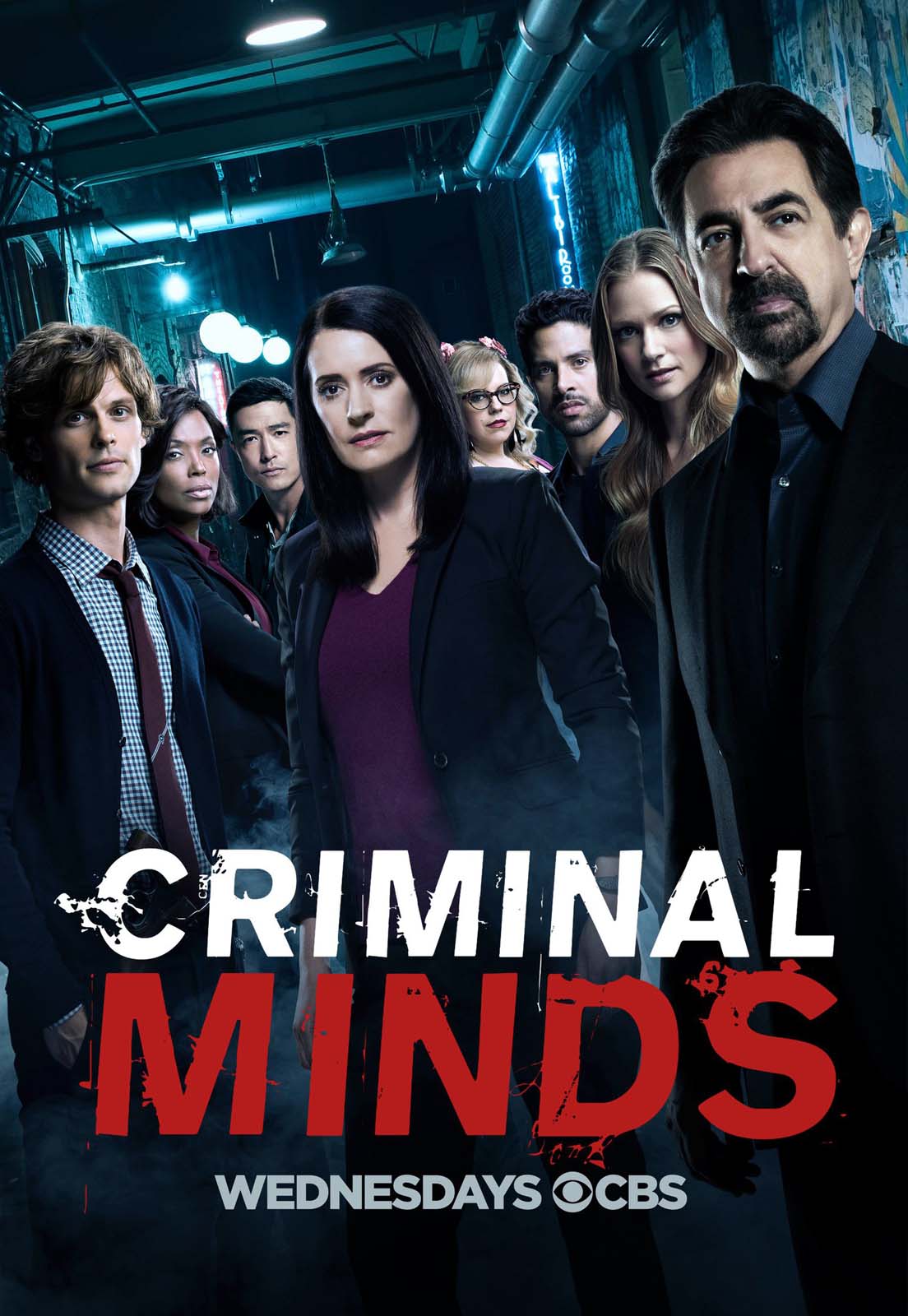
8. “Criminal Minds” (premiered 2005)
The crime show’s first season featured the episode “Natural Born Killer,” which was based on the case of Richard Kuklinski, aka “The Iceman,” a contract killer for organized crime families.

9. The Accused (1988)
Jodie Foster won an Oscar for her portrayal of a rape victim seeking justice from the men who attacked her. The film was based on the 1983 rape of Cheryl Araujo in Massachusetts.

10. Henry: Portrait of a Serial Killer (1991)
This chilling film stars Michael Rooker as Henry, a cold-blooded serial killer based on the real-life Henry Lee Lucas. It deviates from the true account in several ways, but is notable for its bracing and frank approach to the horrific subject matter. Lucas later recanted to some of his murder claims, casting doubt on the real number of victims he accrued.

11. Alpha Dog (2006)
Featuring a young cast including Anton Yelchin, Emile Hirsch, and Justin Timberlake, Alpha Dog is based on the true story of the kidnapping and killing of Nicholas Markowitz, only 15 years old, and the involvement of local drug dealer Jesse James Hollywood. Hollywood is currently serving a life sentence for orchestrating the plot.

12. Dog Day Afternoon (1975)
Sidney Lumet’s award-winning crime drama is based on the real-life hostage situation that occurred in 1972 when two men held up a bank in Brooklyn. Their day-long siege came to an end when one was arrested and the other killed by the FBI in the final moments of the incident.

13. The Insider (1999)
Inspired by an article in Vanity Fair, Michael Mann’s The Insider is based on the “60 Minutes” interview with Jeffrey Wigand, a corporate whistle-blower who angered his bosses at a tobacco company when he went public with knowledge about a cover-up related to nicotine’s addictive qualities. Tobacco firm Brown and Williamson even took out a full-page ad in The Wall Street Journal after the film opened to protest its approach to the story. The movie received a host of critical acclaim.

14. Notorious (2009)
This 2009 biographical drama detailed the life of Christopher Wallace, aka the Notorious B.I.G., a rapper who was shot and killed by an unknown assailant in 1997.

15. Ghosts of Mississippi (1996)
Civil rights leader Medgar Evers was assassinated in June 1963, but it wasn’t until 1994 that his killer, white supremacist Byron De La Beckwith, was convicted for the killing. Rob Reiner’s film of the events was a moving portrayal of the long search for justice.

16. Monster (2003)
Serial killer Aileen Wuornos, a former prostitute, killed seven men throughout the late 1980s and early 1990s, claiming they raped her or attempted to do so while she was in the process of performing sex acts. She was convicted of the murders and executed by lethal injection in 2002. The film is tough one, but Charlize Theron’s performance as Wuornos earned her an Academy Award.

17. Serpico (1973)
Before Sidney Lumet and Al Pacino teamed for Dog Day Afternoon, they worked together on this true-crime classic about a cop determined to do what’s right. Based on the true story of NYPD officer Frank Serpico, the film follows an undercover officer who works to expose the corruption of fellow officers.

18. The Perfect Husband: The Laci Peterson Story (2004)
TV-movies have long been home to stories based on true events, as was the case with USA Network’s film version of the sordid affair involving Lacy Peterson, the pregnant wife of Scott. When Lacy disappeared, Scott led the charge to find her, but when her dead body was found mutilated, Scott was arrested for the crime. He was eventually convicted for the murder, though he maintains his innocence. He currently waits on death row.

19. American Gangster (2007)
Russell Crowe plays a determined detective and Denzel Washington plays a powerful Harlem drug kingpin in this film based on true events chronicled in New York Magazine. The film earned general critical acclaim and garnered multiple award nominations.

20. Casino (1995)
Once again working from source material by Nicholas Pileggi, Martin Scorsese’s epic about criminals rising to power in Las Vegas remains one of his most-praised films. It’s also one his coarsest: At the time of its release, it featured more uses of “f***” than any other film to date.

21. Catch Me If You Can (2002)
Steven Spielberg’s light caper film tells the true story of Frank Abagnale Jr. (Leonardo DiCaprio), a young man who conned his way into fortune by forging checks and posing as, among others, a Pan Am pilot, a doctor, and a lawyer. Although he was caught and convicted for his crimes, he was eventually brought on to work with the FBI to help catch other forgers.

22. Wonderland (2003)
Val Kilmer plays porn star John Holmes in this account of the robbery and murders Holmes was involved with in 1981. Holmes was acquitted of any wrongdoing after successfully portraying himself as an unwitting accomplice.

23. Bully (2001)
Directed by Larry Clark, Bully is based on the true plot of several high schoolers to kill their peer and tormentor after they tire of his physical and emotional abuse. The multple conspirators all received jail time for the killing, ranging from 11 years to a death sentence that was commuted to life imprisonment.

24. Blow (2001)
The final film from Ted Demme details the life and times of George Jung (Johnny Depp), a notorious cocaine smuggler who winds up working with Colombians like Pablo Escobar.

25. The Untouchables (1987)
Also the name of a 1950s TV series, this 1987 film deals with one of the most infamous criminals in American history: Al Capone. Eliot Ness’ quest to bring him to justice during the Prohibition era remains a popular fodder for entertainment, and this film version was a critical and financial success.

Post to Twitter Post to Delicious Delicious Post to Digg Digg This Post to Facebook Facebook Post to Reddit Reddit Post to StumbleUpon Stumble This Post

10 Rappers That Wound Up In Jail

 
People in the entertainment world, including rappers, have a huge influence over our young generations. Although there are some out there that try to be a positive influence, you really need to look at who your kids are watching as well as listening too. Take a look at these 10 rappers that our young kids listen too, look up too, and idolize.
 

#1. R. Kelly

June 5, 2002 – R. Kelly was arrested in Florida after an investigation of a videotape recorded between November 1997 and February, allegedly showed Kelly having sex with an under aged girl. He was charged with 21 counts of child pornography and illegally engaging in sexual acts with a minor.

#2. DMX

On December 24, 2002, DMX, born Earl Simmons, was charged with unsafe lane changing, failure to signal and possession of a forged instrument.

Other arrest include:
On June 24, 2004 DMX was held in cental lockup in Queens, New York after being arrested at Kennedy Airport’s parking lot after he and another man were allegedly caught trying to steal a car then fighting with the car’s owner. DMX alledgedly crashed through the parking-lot gate, shouting to the parking lot attendant that he was as an FBI agent. He then stopped another driver and tried to force him out of his car, also identifying himself as an FBI agent.

#3. Suge Knight

Suge Knight, co-founder of Death Row Records, was arrested in March of 1997 on violating his probation from a 1992 assault conviction.

Knight received probation in 1992 for weapons and assault charges. He was found guilty of breaking that probation in 1996 after security cameras at the MGM Grand Hotel in Las Vegas caught him and a group of other men beating a gang memeber. He was sentenced to nine years in prison for parole violation.

#4. Sean “Puffy” Combs

Sean “Puffy” Combs, CEO of Bad Boy, was arrested and charged with criminal possession of a weapon and criminal possession of stolen goods.

Prior to his arrest he and then-girlfriend, Jennifer Lopez were partying at at a Bronx, NY nightclub, Club New York, when at around 3 a.m. an argument broke out and gun shots were fired. Combs, Lopez, bodyguard Anthony Jones and driver, Wardel Fenderson fled the club in Combs’ Lincoln Navigator. Police stopped the vehicle after Fenderson ran a red light. Police found a stolen 9 mm pistol sitting on the front seat and the four were arrested, questioned and released.

On January 4, 2000, Combs went before the grand jury investigating the nightclub shooting. He was indicted on weapons charges and later for bribery after driver, Wardel Fenderson said Lopez and Jones offered him $50,000 and a diamond ring if he agreed to say he owned the gun found in the car.

On March 16, 2001, Combs, represented by attorney Johnnie Cochran Jr., was acquitted of the weapons possession and bribery charges. The jury also acquitted Combs’ bodyguard Anthony Jones of all charges.

Soon after the trial, Combs’ changed his moniker from “Puffy” to “P. Diddy”, claiming the trial had changed him. “I’ve changed, I’ve matured,” Combs’ told Time. “This whole thing has made me deeper. It’s not what it was about before … I want to sit down and think about it and try and understand it on an intellectual level.”

#5. Jamal “Shyne” Barrow

Rapper, Jamal “Shyne” Barrow is serving a 10-year prison sentence for his involvement in a 1999 shooting at a night club in New York City.

Known in some circles as P. Diddy’s “fall guy”, rapper and one time P. Diddy protege, Jamal “Shyne” Barrow was found guilty of first-degree assault, gun possession, and reckless endangerment in a 1999 New York Club shooting incident.

#6. Tupac “2Pac” Shakur

On November 18, 1993, Tupac “2Pac” Shakur was arrested for sexually abusing a 19-year-old woman, who he met in a New York nightclub, and allegedly sodomized and sexually abused with three of his friends. In 1995, he was sentenced to prison for up to four and a half years, but received an early release after a few months. In September 1996, the 25-year-old Shakur was shot four times in the chest and died from the wounds.

#7. Young Jeezy

Atlanta rapper Young Jeezy was arrested with guns in South Beach, Florida after an alleged shooting took place.

The 28-year-old Atlanta rapper, Young Jeezy (Jay Jenkins) was arrested in South Beach, Florida and charged with two counts of carrying a concealed firearm without a permit.

Jezzy and a group of nine other men were allegedly involved in a fight earlier in the evening. Shots were fired after a bystander who was filming the incident refused to turn over his camcorder to the group.

Jezzy and his group fled the scene in two SUVs, but were stopped shortly afterwards. Police found Jezzy in control of two semiautomatic firearms, one under his seat and one near the armrest.

According to the police, Jezzy has a previous arrest for carrying a concealed weapon.

#8. Snoop Dogg

In August 1993 Rapper and producer Calvin Broadus, also known as Snoop Dogg was charged for being an accomplice to the murder of Phillip Woldermarian. In February 1996, with the help of attorney Jonnie Cochran, Snoop was found not guilty of all charges but voluntary manslaughter, on which the jury deadlocked.

August 2003 – Snoop was named in an affidavit claiming that he and the makers of the “Girls Gone Wild: Doggy Style” tape lured two underage girls to take their tops off for the camera by offering them marijuana and ecstasy. The suit was settled in July 2004.

#9. Da Brat

Rapper Shawntae Harris, (aka Da Brat), 33, was arrested on November 1, 2007, at the Studio 72 club northeast of Atlanta after she reportedly hit a 24-year-old waitress with a bottle of rum causing deep cuts on her face and around the eye. Harris was charged with felony aggravated assault and was released after posting a $50,000 bond.

#10. Eminem

Marshall Mathers, III (aka Eminem) was arrested twice in June 2000 on gun charges in Michigan, and was hit last year with probationary sentences in both cases, one in Royal Oak, the other in Warren. The rapper was nabbed by Warren cops for carrying a concealed weapon and assault after fighting with a man he saw kissing his estranged wife Kim outside of a club. He also got popped for brandishing a weapon during a parking lot beef with members of the rival rap outfit Insane Clown Posse.

Post to Twitter Post to Delicious Delicious Post to Digg Digg This Post to Facebook Facebook Post to Reddit Reddit Post to StumbleUpon Stumble This Post

Cold Case: 20 Biggest Unsolved Murders

There’s something about an unsolved murder that grabs our attention, whether it’s the air of mystery surrounding the proceeedings or the shock at learning the brutal details behind a high-profile slaying. Here are just a few of the most notorious unsolved cases of all time:

black_dahlia_cju1. The Black Dahlia (ca. January 15, 1947)
Elizabeth Short was 22 years old when she was brutally murdered in Los Angeles in the late 1940s. A woman with a troubled past and no fixed path through life, she was in L.A. visiting an old boyfriend and bouncing from one apartment to the next at the time of her death. She was found in a vacant lot, her body severed at the waist and her face slashed from the edge of her mouth toward the ears, creating a ghastly smile. Reporters nicknamed her the Black Dahlia after the 1946 noir film The Blue Dahlia. The murder sparked the largest LAPD investigation to that point, and the news media ran with the frenzy. Despite many theories put forth over the years, the case was never solved.

2. Boy in the Box (February 25, 1957)
One of the most gruesome unsolved murders involves an unknown child referred to as the Boy in the Box. Approximately 4-6 years old, the boy’s naked body was found in a cardboard box in Philadelphia 1957. Pictures of the boy were distributed with gas bills throughout the city in hopes of finding somone who knew what happened, but no lead ever materialized. One theory speculated that the boy belonged to the stepdaughter of the man who ran the foster home near the site the body was found; another theory, put forth by a woman with a history of mental illness, claimed that the boy was bought and used as a sexual slave before being murdered and discarded. No direct evidence was found for either theory.

3. Bob Crane (June 29, 1978)
Best known for his leading role on “Hogan’s Heroes,” Bob Crane was also involved with an underground sex scene in which he and friend John Henry Carpenter, an audio-visual pro, would film themselves having sex with women. Crane’s body was found in an Arizona apartment complex, bludgeoned to death by an unknown weapon that police reasoned was a film tripod. Smears of blood that matched Crane’s blood type were found in Carpenter’s car, but the lack of forensic technology at the time (like DNA testing) made it impossible to determine if the blood belonged to Crane. The case went cold from a lack of evidence, and though it was reopened in 1992 and Carpenter arrested, evidence from the murder hadn’t been properly preserved and was thus unusable. Carpenter was acquitted and maintained his innocence until he died in 1998. The case is officially unsolved.

4. Raymond Washington (August 9, 1979)
Raymond Washington was the founder of the Los Angeles gang that would come to call itself the Crips, but many say that his unique moral code approved only of fighting and theft as a means of survival, and that he frowned on the use of handguns and the growing level of homicides associated with gangs. He was shot and killed when he was just 25, and no one was ever arrested for the crime. People have speculated that his murder was carried out by a rival gang member or perhaps by someone with whom he was involved in a personal dispute.

5. Dian Fossey (December 26, 1985)
Immortalized in the Oscar-nominated film Gorillas in the Mist, Dian Fossey as an American zoologist who devoted her professional career to studying gorillas in Africa and protecting them from poaching and exploitation. She was found dead in her cabin in 1985, killed by a machete that had been hanging decoratively on her wall. With her valuables still present, her death appeared to be politically or personally motivated. Although many suspects were questioned, the killer was never found.

6. JonBenet Ramsey (December 26, 1996)
JonBenet Ramsey was killed only a few months after she turned 6. Her mother discovered the girl was missing and found a ransom note, at which point police were contacted. A search of the house found the girl’s body in a wine cellar, strangled to death. The case ignited a media firestorm involving the parents, accused of neglect and implicated in the crime, and the investigators, who didn’t properly seal the crime scene. The Ramsey family was officially cleared from suspicion in 2008, and though police have been able to put together a DNA composite of the killer, the crime remains unsolved. (John Mark Karr confessed to the crime in 2006 but was cleared.)

7. Tupac Shakur (September 13, 1996)
Rap artist Tupac Shakur was a top-selling performer when he was shot in Las Vegas after the Mike Tyson-Bruce Seldon fight at the MGM Grand on September 7, 1996. After a minor brawl with a member of the Crips in the Grand’s lobby, Shakur was shot in a drive-by while riding with Death Row Records CEO Marion “Suge” Knight. Although he seemed to make a comeback in the hospital, Shakur died of internal bleeding on September 13. Law enforcement officials made slow progress in the ensuing investigation, and though the shooting occurred on a public and crowded street, no one has ever been arrested for the crime.

8. Notorious B.I.G. (March 9, 1997)
Christopher Wallace, better known as the Notorious B.I.G. or Biggie Smalls, was a gifted MC known also for his involvement in the hip-hop feud between the East and West Coasts. He was even rumored to be involved in the death of Tupac Shakur, though that was never proven. Following a party held after the Soul Train Music Awards in March 1997, Wallace was shot while riding in an SUV and pronounced dead that night at the hospital. Many theories have been floated about the killing, from retaliation over money owed to various conspiracy theories, but the shooter was never identified.

9. Jack the Ripper killings (1888)
One of the most infamous serial killers in history, Jack the Ripper is the name given to the unknown murderer who slaughtered a series of prostitutes in London at the end of the 19th century. Scotland Yard and local media outlets received letters from the killer (or possibly killers) included body parts from the victims. The slayings have inspired a host of fictional works as well as dozens of theories about the identity of Jack the Ripper, but the true identity of the killer has never been determined.

10. Oscar Romero (March 24, 1980)
Oscar Romero, the fourth Archbishop of San Salvador, was assassinated in 1980 while celebrating mass at a tiny chapel in El Salvador. A U.N. report posits that his killers were members of a death squad, and though Álvaro Rafael Saravia was eventually found guilty of conspiring in the murder, the actual killer remains unknown. Romero’s death came a day after he’d pleaded with his countrymen to stop carrying out their government’s orders to oppress basic human rights.

11. Andrew and Abby Borden (August 4, 1892)
Everyone knows the name Lizzie Borden from the children’s rhyme about her taking an ax to her parents, but though the young woman was tried for the double homicide, there wasn’t quite enough evidence to convict her of the crime.

12. Zodiac killings (1968-1972)
Seven people were killed throughout Northern California by an unknown man who came to be known as the Zodiac killer because of the taunting letters he sent to police. The letters also included cryptograms, some of which still haven’t been decoded. The first killings came in December 1968 and July 1969, and the first letters claiming responsibility for those killings were sent to three newspapers in August 1969. Some victims were shot and others stabbed, setting the Zodiac apart from serial killers that stick to one method of execution. San Francisco police detective Dave Toschi was one of those who worked the case, and would later become the basis for the fictional character Dirty Harry. Despite a prime suspect in Arthur Leigh Allen — identified years later by an early surviving victim as the shooter — the case was never solved. Allen died in 1992, but a film positing him as a likely killer was released to acclaim in 2007.

13. William Goebel (January 30, 1900)
William Goebel is the only U.S. governor to be assassinated in office. After winning a hotly contested election for the governorship of Kentucky, was shot walking to the Old State Capitol. He was sworn in a day later and died three days later. Political rival William S. Taylor was suspected of having knowledge of who pulled the trigger, but he fled to Indiana to avoid extradition and became a lawyer there. Some men were convicted of a conspiracy to kill Goebel, but the murderer’s identity remains a mystery.

14. William Desmond Taylor (February 1, 1922)
William Desmond Taylor was an actor in the early years of Hollywood whose death was one of the many lurid affairs that led to sensationalistic coverage by a thirsty media. His body was found inside his home in the early hours of February 1, 1922. He had been shot in the back. More than a dozen people were held up by the public as suspects, including friends and employees of Taylor’s, but most of the physical evidence needed to secure a conviction was lost because of crime scene mismanagement and threads of corruption in the LAPD. Actress Margaret Gibson is alleged to have confessed to the murder in 1964, but no hard evidence has even been able to produce the identity of the killer.

15. Harry Oakes (July 8, 1943)
Sir Harry Oakes, an American-born Brit who owned a gold mine, was found murdered in 1943 in his Nassau mansion. Instead of flying in detectives from Scotland Yard, the islands’ governor, the Duke of Windsor, brought in a pair of Miami detectives. They arrested Oakes’ son-in-law, but the man was acquitted when it was found that the detectives had fabricated evidence. The murderer was never found, though theories abounded. Some say Oakes’ son-in-law really was the guilty party, while others claim Oakes was killed as a result of his dealings with organized crime.

16. Barbara and Patricia Grimes (December 28, 1956)
The Grimes sisters disappeared shortly after Christmas 1956 in Chicago and were found dead on January 22, 1957. They were seen at a movie theater on December 28, but subsequent sighting claims are less reliable. An autopsy concluded that they died of shock and exposure to the cold, but that statement ignores the bruises and wounds on their bodies, including holes that could have come from an ice pick. The Chicago Police Department crime lab also found that Barbara Grimes had been sexually molested before her murder. A drifter named Benny Bedwell was suspected and eventually confessed, though he then said his confession was coerced by officers.

17. Deanna Cremin (March 30, 1995)
Seventeen-year-old Deanna Cremin was found strangled behind a senior housing complex in Middlesex, Massachusetts, shortly after her birthday. After going out with friends and visiting her boyfriend, the two walked back to her home, though the boyfriend left her at the halfway point. He is considered the last person to have seen her alive. The boyfriend and two other men were investigated, but no charges pressed. New forensic evidenced was announced in 2005, thanks to technology, and the case also received a boost in 2009 when Middlesex district attorney pleaded for people to come forward with information. Her murder, however, remains unsolved.

18. Amber Hagerman (January 15, 1996)
Amber Hagerman was only 9 years old when she died. Abducted while riding her bike in Arlington, Texas, her disapperance ignited a huge search that brought in the FBI. Her body was found by a man walking his dog four days after she’d gone missing. Her throat had been cut, and evidence showed that she’d been alive fow two days before being killed. The high-profile case and ensuing call from Amber’s parents for tougher laws for sex offenders, including a national offender registry, led to the creation of the AMBER Alert, a national bulletin distributed via TV and radio when a child goes missing. The alert’s name is technically “America’s Missing: Broadcasting Emergency Response,” but it was named after Amber.

19. Suzanne Jovin (December 4, 1998)
Yale University senior Suzanne Jovin was stabbed to death near campus in New Haven, Connecticut. After chatting with a fellow student and continuing on her way, Jovin’s body was later that night found stabbed 17 times in the head and neck with her throat slit. Witnesses saw a brown van parked nearby, but nothing came of that lead. One of professors was suspected, a move that damaged his career, though he was eventually cleared. The killer has never been found.

20. The Somerton Man (December 1, 1948)
Also known as the Taman Shud case, the mystery of the Somerton Man is one of the most baffling unsolved murders in history. A man in his 40s was found on the Somerton beach in Adelaide, Australia, on December 1, 1948. He carried no identification, and the labels had been removed from his clothes. The cause of death was determined to be poison, though the type wasn’t known. Attempts to identify the body proved fruitless, and the growing pile of clues, including a suitcase of the man’s possessions, only added to the confusion. A slip of paper with the words “Taman Shud” was found in a hidden pocket in the man’s trousers, leading police to a collection of poems called The Rubaiyat by Omar Khayyam. The book was found by a man in his car near the scene of the crime, and contained a phone number and portion of jumbled letters that might have been a code, though it’s never been cracked. The phone number led to a woman who said she didn’t know anything about the man and who police omitted from future searches, thereby eliminating one of the case’s best leads. It’s been more than 60 years, and no one has ever discovered the killer or the identity of the Somerton Man.

Post to Twitter Post to Delicious Delicious Post to Digg Digg This Post to Facebook Facebook Post to Reddit Reddit Post to StumbleUpon Stumble This Post

California Universities – Students Take Back Their Schools

protestStudents at UC Santa Cruz have been occupying the administration building (Kerr Hall) at the school for the past three days. According to several of the the students (over 370 are involved in the protest) there is no way they are going to give up leading many to suspect that the police will soon begin forcibly removing them.  This all started after the regents board at the school approved a 32 % increase in tuition. The students are concerned that they simply won’t be able to afford going to school there any longer as that is a very large increase for them to absorb.  The school says they have no plans to negotiate with the students and have already warned them that they will have the police come and clear the students out if they don’t leave on their own.  The students expect that will happen very soon. Actually, this protest is one of several demonstrations going on in California universities this past week. On Friday night, 41 protesters occupying a building at UC Berkley were arrested and cited for trespassing (and quickly released).  On Thursday, 52 students were arrested at UC Davis after they refused to leave the school’s administration building where they were also protesting tuition increases.  UCLA’s Campbell Hall was also occupied for several hours this past Thursday by protesting students.  The tuition hikes will start in January when they rates will go up 15% which is more than double the average public tuition hike last year. On average, tuition and fees at the nation’s universities increased by 6.5%.  An interesting note is that students that qualify for financial aid that have families making less than $70,000 per year will have their tuition covered.  Which makes me wonder if the reason why the tuition increases are happening isn’t really being totally driven by the fact that they can charge more and have Federal grants and funding cover the costs for a majority of the students.  The schools adamantly reject that stating that they are being forced to raise the tuition to keep the university open.  In any event, it will be very interesting to follow these protests over the next couple of weeks.

Post to Twitter Post to Delicious Delicious Post to Digg Digg This Post to Facebook Facebook Post to Reddit Reddit Post to StumbleUpon Stumble This Post

Indecent Exposure – Black and White

If you are found guilty of indecent exposure among other possible punishments you will most likely find yourself on the registered sex offender list. Here is a map of the U.S. with the number of registered sex offenders by State:

Screen shot 2009-11-12 at 7.42.57 AM

There are several crimes that will end up causing you to get your name added to the registered sex offender list, one crime is indecent exposure and it certainly is not the worst possible offense that will land you on this list.  However, it’s an example of one that seems to be very subjective.  Last month (October 2009) there were a couple of cases which I think are interesting as they point out that what everyone thinks or assumes is indecent varies pretty wildly. While this can lead to interesting discussions and even heated debates, the reality of the situation is that as a matter of law whether an act is indecent or not varies by State and to a wide degree by the people investigating the situation. Take for example two recent cases that were in the news and posted all over the Internet.

ericThe first case is the case of Eric Williamson, the Virginia man that was arrested for making breakfast and coffee in the nude… okay that’s not the whole story. Apparently he was sipping coffee in clear view of a window that faced a public sidewalk.  A mother and child were walking by, took offense and called the police.  This resulted in the police arresting Williamson and charging him with indecent exposure.  Williamson was in the privacy of his own home true enough, but does that really protect him from an indecent exposure charge?  Would a reasonable person do what he did?  I don’t think so.  It’s one thing to drink coffee naked in an interior room of the house completely out of the view of anyone passing by your house and quite another to stand in front of your window in plain view of the public, butt naked sucking down your favorite home-brewed java.

So I did a little bit of research on the Internet as believe me this could go on for days (the research) if I didn’t cut it off at some point.  Let’s just say there are thousands of cases of indecent exposure on the Internet to read about.  Anyway here is the most basic legal definition I could find:

peeIndecent exposure is a crime that is defined as exposing one’s genitals or socially deemed “private parts” (such as behind or breasts) in a public place where others are present and may witness the act. A person who commits indecent exposure does so intentionally with an understanding that his/her conduct will likely alarm and offend others.

Well, that’s a tough one… Did Williamson intentionally expose himself?  Does lack of common sense come intomomeyesplay here at all?  In a case like this how does one exactly prove that Williamson had intent to expose himself to the mother and child walking by the house.  Well, I still think he is guilty because a reasonable person would close the blinds, drapes, etc. and simply just not do what this jackass did.  I also just have a problem with giving a person a pass because they are a moron.

Screen shot 2009-11-12 at 7.06.47 AMIn a another recent case (October 2009) we have the story of a 33 year-old Pennsylvania man, Michael Parziale. Well if all cases were this clear, everything would be a lot easier. Okay so this idiot allegedly takes pleasure in sitting in his car in public places with his door open and then masturbating while women walk by (well he also is allegedly perfectly comfortable walking up to women and doing the same thing). Okay, so that is a clear case of indecent exposure. This guy is clearly exposing his private parts intentionally in a public place and should be quite certain that this will both alarm and offend just about anyone with a brain. The only question here is… Why?  What can cause someone to behave in such a bizarre way?  There can be no doubt that the indecent exposure laws were clearly written to protect the public from people like Parizale.

So in this sometimes crazy world where it can be pretty hard to shock people where do we draw the line?  Do we arrest everyone that comes close to the line (like Williamson) or do we just go after the people that completely blow past the line and blatantly violate the law (like Parizale)?  Obviously, we don’t really have to choose… Breaking the law is breaking the law and there is no such thing as only breaking the law a little bit.  Like many things though it is not 100% black and white and there is at least a little bit of gray involved.  I guess in either case the judge or jury will take the decision in the cases of Williamson and Parizale.  The moral of the story is if in doubt… throw on a pair of pants, a robe, ANYTHING!

Post to Twitter Post to Delicious Delicious Post to Digg Digg This Post to Facebook Facebook Post to Reddit Reddit Post to StumbleUpon Stumble This Post

U.S. Violent Crimes by State

We got a lot of response regarding crime facts in the U.S. so we decided to continue the series and to add some statistics that looked into each State and compared violent crimes on a per capita basis. This resulted in us coming across the following chart at the U.S. Census Bureau:
violentcrimes

Take a look at Washington D.C.  that’s something!  It’s interesting to note where our nation’s capital ranks in the area of violent crime.  Is that odd?  It seems so to us.  In any event, there are quite a few States that are considerably worse off than others in this one aspect (not that there aren’t potential perils anywhere you live).

Post to Twitter Post to Delicious Delicious Post to Digg Digg This Post to Facebook Facebook Post to Reddit Reddit Post to StumbleUpon Stumble This Post

College Vigilantes – University of Washington

vigilantes

Frustrated by attacks on their campus, a couple of University of Washington students decided to take matters into their own hands and created a vigilante group to protect areas around the campus where attacks have occurred over the past year.  The group is led by Luis Garcia (left) and Stanley Luong (right) who both were victims of assault themselves on the campus. They put up a page on the social media site Facebook to recruit members, but it was quickly pulled down by the social media company.

They both got concealed license permits and bought handguns and now essentially walk the campus every night as “bait” for would-be criminals.  According to the UW Daily Newspaper, there have been ten assaults and robberies in the campus area in just two months, so Luong and Garcia are correct in identifying the problem.  The only issue is that of legality.  It is definitely illegal to carry a concealed handgun on college campuses in Washington.  So given that there is a problem and the students can’t legally protect themselves with their 2nd amendment right to bear arms, what is the solution?

It would be ideal for the University of Washington to step in here and beef up the security patrols and/or the local police.  While the students are doing what comes fairly natural to them, in fact, they are putting themselves in grave danger.  Some may consider this to be courageous, unfortunately it is probably more just dangerous.  They aren’t really just putting themselves in harm’s way.  They may potentially cause a situation to escalate more than necessary and there are lots of possible ramifications of that.

We hope that the law enforcement officials in the area will step in and take care of this situation before it gets further out of hand.  While in some cases vigilantes are necessary, it doesn’t seem like a college campus should be one of those cases.

You can see a video by their local news station here.

Post to Twitter Post to Delicious Delicious Post to Digg Digg This Post to Facebook Facebook Post to Reddit Reddit Post to StumbleUpon Stumble This Post

Cool Criminal Justice Classes

CJU spends a lot of time talking about criminal justice careers and everything that prepares someone for a criminal justice job including a great education. Sometimes it is hard for people to envision the types of classes that someone would take in order to graduate with a criminal justice degree. We thought we would put together a list of some of the really cool classes that most criminal justice majors take as they earn their degree (and possibly some just really fun extra courses):

Intro to The Criminal Justice System – Okay, this is not so cool or exciting but is a foundation class that most programs will start with. Generally this is a study of all of the agencies that exist in our court system including: the courts, the police, prosecutors, public defenders, and corrections (officers and facilities). This one is sexy, but just makes sure everyone was paying attention in their civics classes in high school.

Retail Security – Well this is starting to sound more fun, but wait are we talking about mall cops (not that there is anything wrong with that at all)?  In fact, it is about loss prevention and general tactics used to make sure that shoplifting and other theft does not occur.  This is a much maligned career (partially due to the recent Mall Cop movie starring Paul Blart), but is a HUGE problem challenging our retail industry.

Crime Prevention – Now we are getting to some law enforcement work, we are probably starting to get your attention. This class talks about different times of crime prevention strategies that can be deployed by police departments, community organizations, or any other group looking to reduce the crime rates around them (local businesses, etc.).  So again, the focus here is really on avoiding a crime, not investigating crimes.

Forensic Biology – This sounds like some CSI stuff (very cool).  In fact, this is exactly about crime scene investigations and different techniques for collecting evidence.  This course covers topic like ecological, entomological, and biotechnological techniques used by law enforcement personnel across the country.

The typical criminal justice program will offer somewhere around 20 to 50 different classes for a student to choose from to fulfill their degree requirements.  It is important to take a look at the classes that are offered before you plan your class schedules to make sure that you are getting exactly what you are interested and/or need to learn to advance your criminal justice career.

We can’t cover all of the programs offered by every university in this one blog article but did want to wet your whistles and to let you know that the criminal justice field is complex and full of lots of specializations.  So it’s not normally as easy as the criminologists make it look on TV.

Post to Twitter Post to Delicious Delicious Post to Digg Digg This Post to Facebook Facebook Post to Reddit Reddit Post to StumbleUpon Stumble This Post